

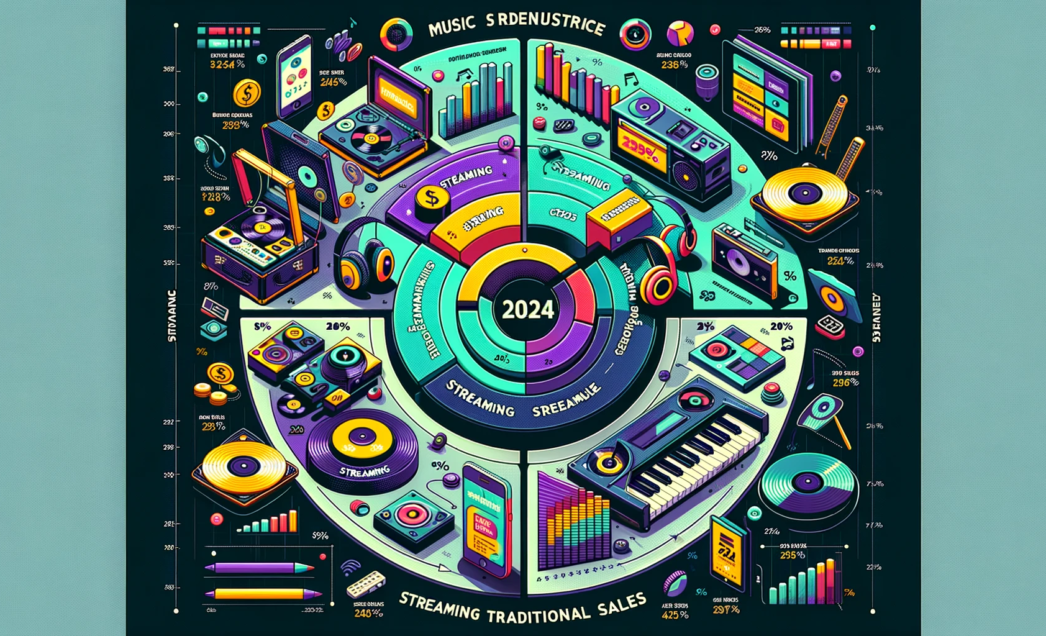

In 2024, the music industry continues to evolve at a rapid pace, with significant changes in how revenue is generated. The digital revolution has led to a major shift from traditional sales to streaming services, a trend that has reshaped the economic landscape of the industry. This article delves into the key aspects of this transformation.
The Streaming Surge
Streaming services have become the backbone of music industry revenue. In 2024, platforms like Spotify, Apple Music, and others account for a substantial portion of the industry’s income. This shift is driven by the convenience and accessibility of streaming. Users have access to millions of songs at their fingertips, coupled with personalized playlists and recommendations, making streaming the preferred choice for most music consumers.
Subscription Models Lead the Way
The majority of streaming revenue comes from subscription models. Users are willing to pay for ad-free, high-quality audio and exclusive content. This model has proven to be more lucrative than ad-supported streams, contributing significantly to the industry’s earnings.
Traditional Sales: A Niche Market
While streaming dominates, traditional sales such as vinyl records, CDs, and digital downloads still hold a special place in the market. In 2024, these formats have become more of a niche, appealing to collectors and audiophiles. Vinyl records, in particular, have seen a resurgence, valued for their tangible qualities and sound fidelity.
The Role of Merchandise and Special Editions
Physical sales are often bolstered by merchandise bundles and special edition releases. These items offer something unique and collectible that streaming services cannot provide, appealing to dedicated fans and collectors.
The Revenue Breakdown
In 2024, the revenue split between streaming and traditional sales is stark. Streaming accounts for the lion’s share, with traditional sales playing a smaller, though still significant, role. This shift is reflected in the way record labels and artists strategize their releases and marketing efforts.
Impact on Artists and Labels
The revenue models of streaming and traditional sales have different implications for artists and labels. Streaming favors those with high play counts, which can sometimes disadvantage new or niche artists. However, it also offers opportunities for global exposure. Traditional sales, while smaller in volume, can offer higher per-unit profits and a different kind of fan engagement.
Conclusion
The music industry in 2024 is a tale of two mediums: the dominant streaming services and the resilient traditional sales. Each plays a vital role in the industry’s ecosystem, catering to different preferences and experiences of music consumption. As the industry continues to evolve, the balance between these two revenue streams will be crucial in shaping the future of music.
Understanding the revenue dynamics of the music industry in 2024 is key to appreciating the ongoing evolution of how we consume and value music. Whether you’re streaming the latest hits or dropping the needle on a vinyl record, your choices are part of a larger narrative of change and continuity in the music world. 🎵📈🎶


Leave A Reply